Different audiences, use cases and teams, but no shared UX foundation.
5Chatbots
Case study
The project
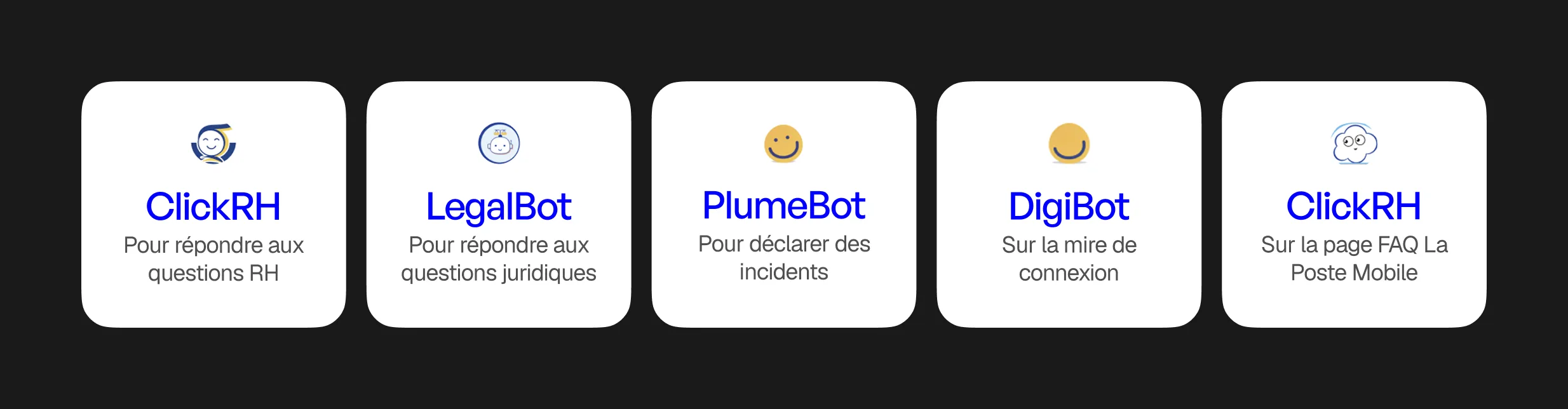
Probayes operated several chatbots across La Poste Group, covering internal and customer-facing needs such as employee support, legal assistance, incident reporting and customer service.
Each chatbot had evolved separately, with its own features, interaction patterns and writing conventions. Probayes wanted a shared UX foundation that could guide future improvements without forcing every product into the same experience.
I was the Lead UX/UI Designer on the engagement, working with a UX Designer. I organised the Design work, maintained the project roadmap, led key workshops and presentations, and was responsible for the overall consistency of the Design direction.
The challenge
Different audiences, use cases and teams, but no shared UX foundation.
5Chatbots
01Diagnosis
Before standardising anything, we needed to understand which problems were specific to each chatbot and which could become shared principles.
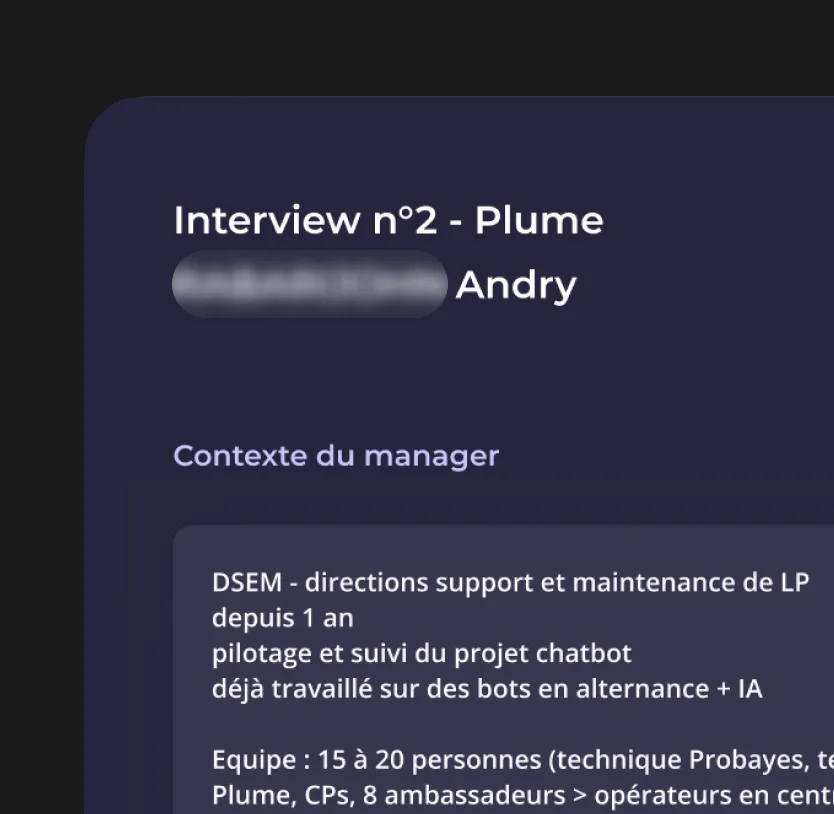
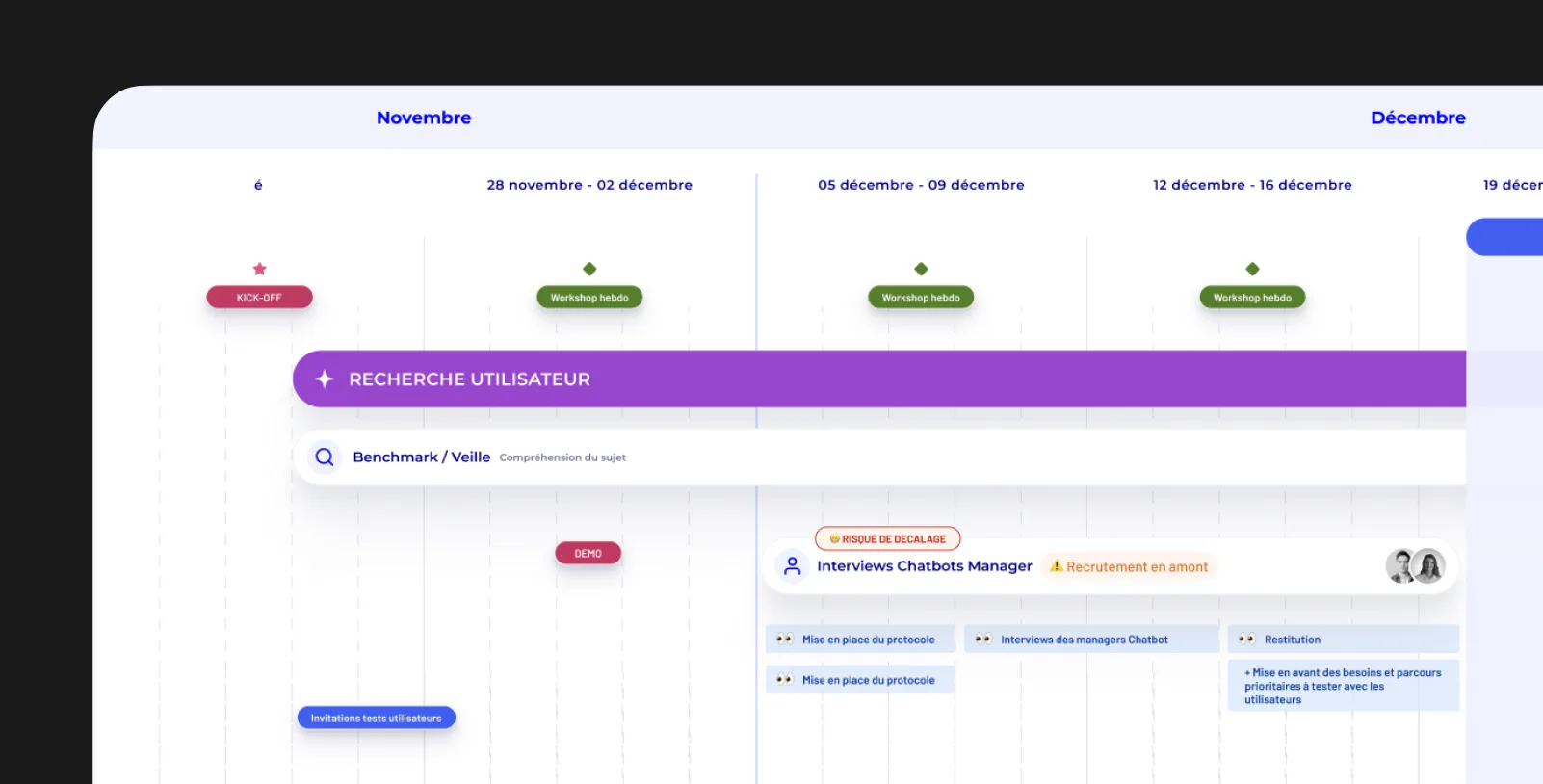
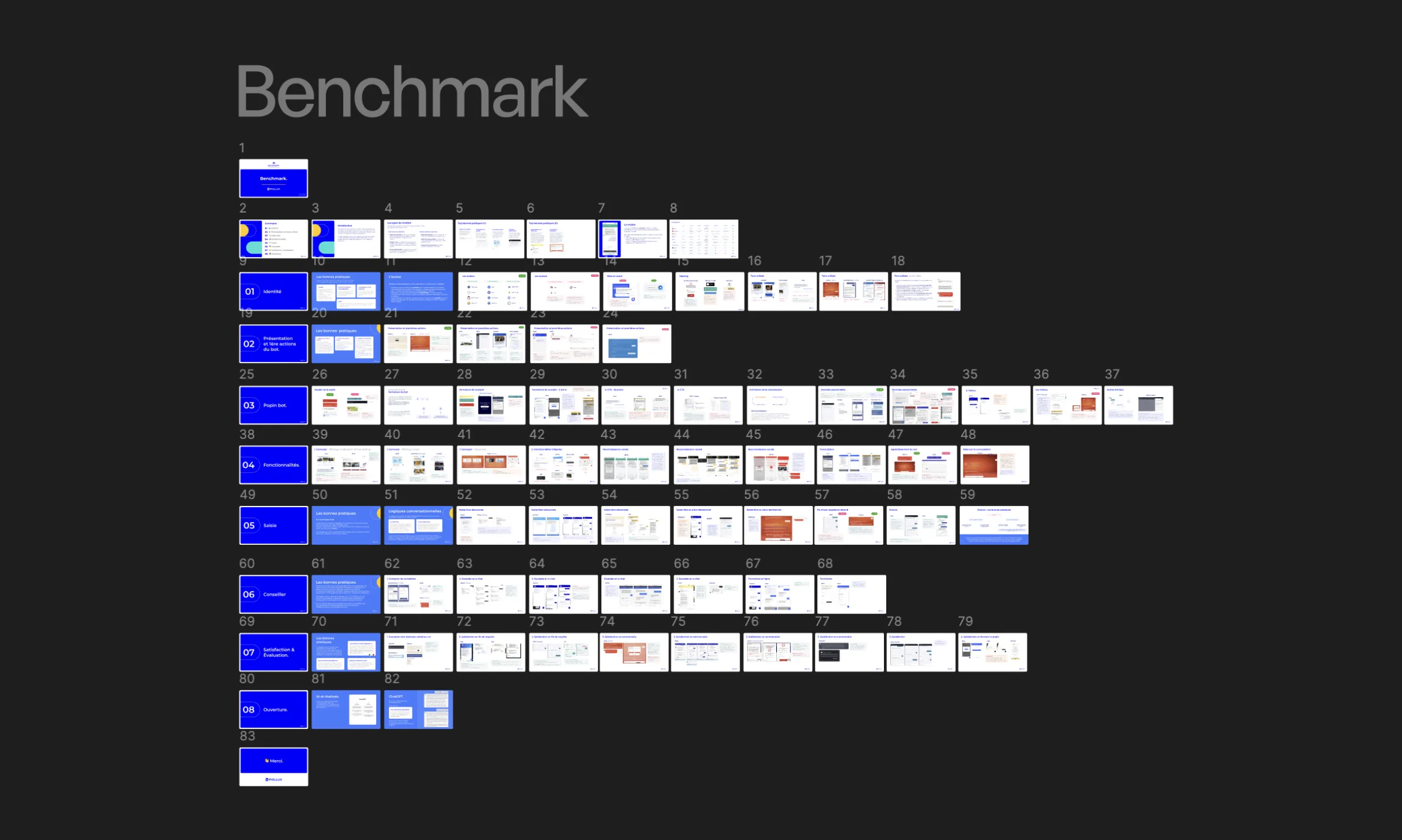
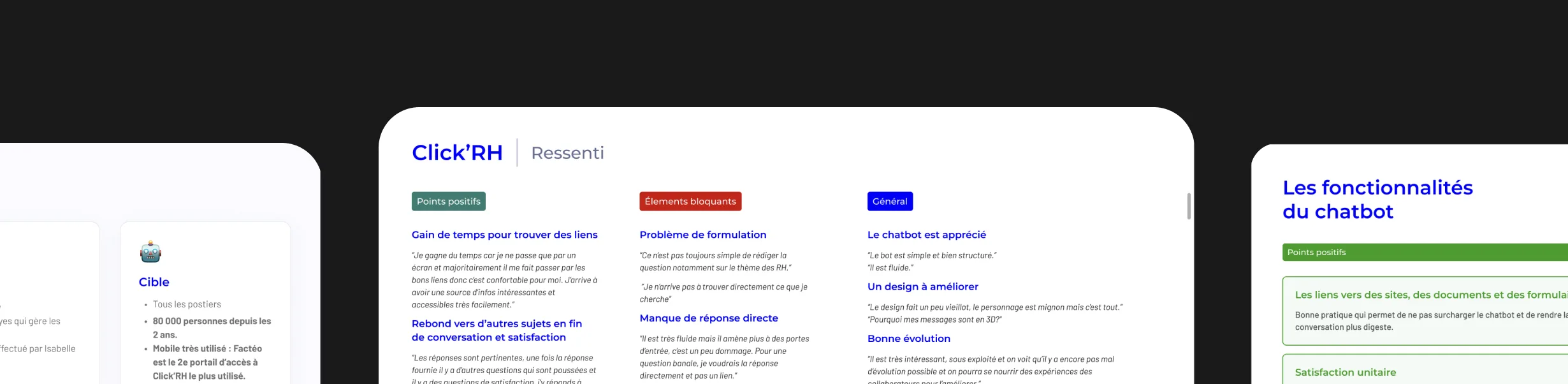
We combined an audit of the five experiences with a benchmark, 10 chatbot-manager interviews and 8 user tests across internal and customer-facing bots.
This gave us a broader view of the problem before defining any common rules: existing UX quality, user behaviour, business needs and the practices already used by each team.
02Synthesis
Each recurring issue was read twice: once as a problem inside one product, once as a pattern that deserved a common principle.
Dense introduction
Onboarding principle
Long responses
Conversation pacing principle
Repeated misunderstanding
Recovery and escalation principle
Weak exit path
Clearer human or alternative channel
03Alignment
I wanted the managers of all five chatbots to be part of shaping the guidelines. They had the closest view of how each chatbot was used day to day, the recurring issues they encountered and the feedback coming from users. Their knowledge was essential to challenge our research and make sure the future framework was grounded in real operational needs.
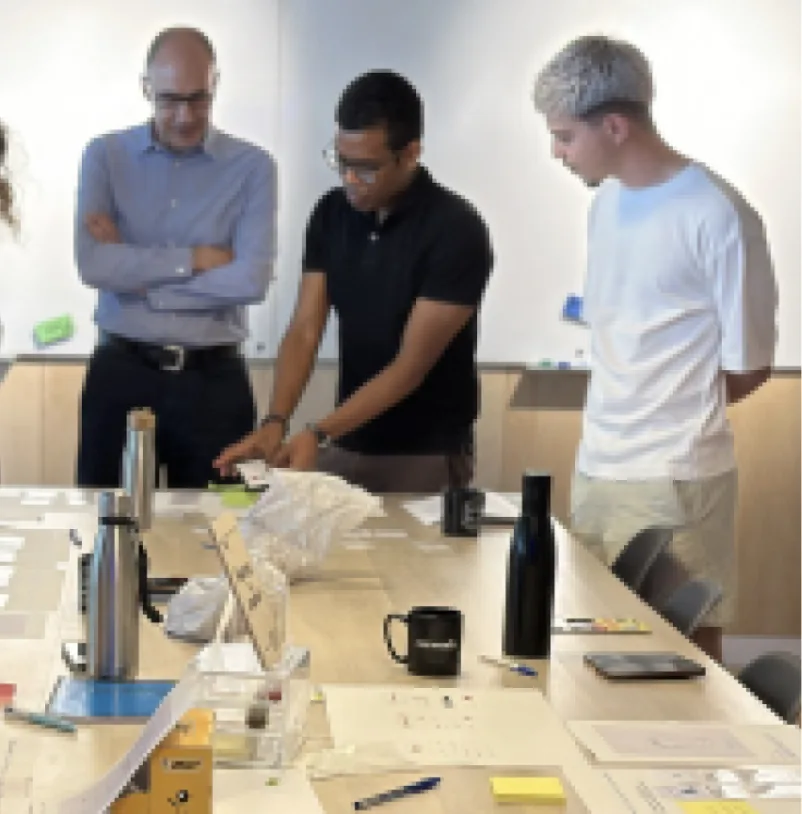
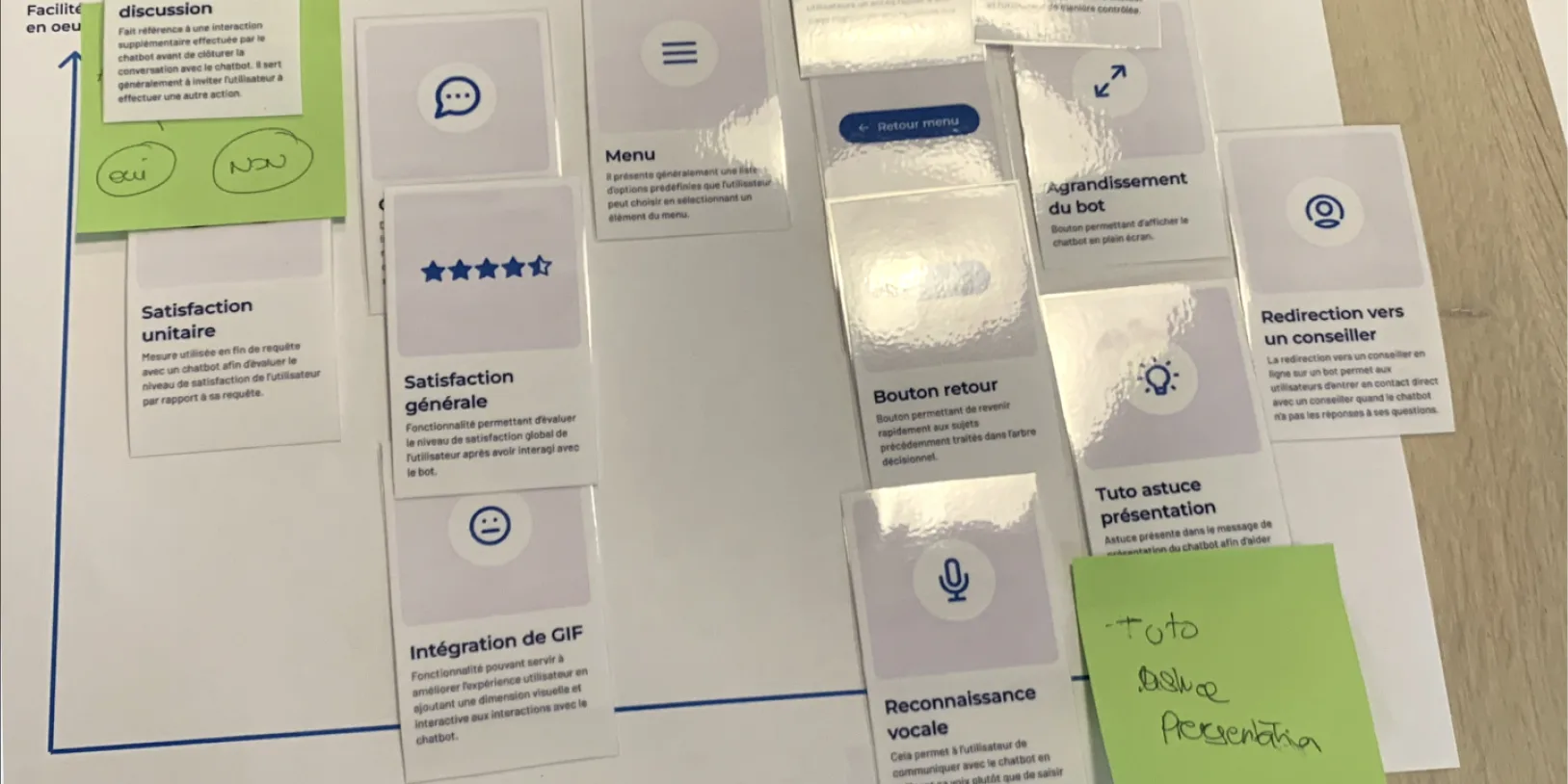
To close the research phase, I organised a full day of workshops around two complementary topics. The functional workshop used around 30 feature cards to compare use cases, surface recurring needs and identify what could be shared across the five chatbots. The identity workshop focused on personality, tone of voice and conversational Do’s and Don’ts, helping us explore how to create consistency without erasing what made each chatbot distinct.
The workshops gave us a richer set of inputs, not a ready-made solution. We brought those insights back into Design to analyse the patterns, prioritise what should become shared and turn them into a coherent direction for the guidelines.
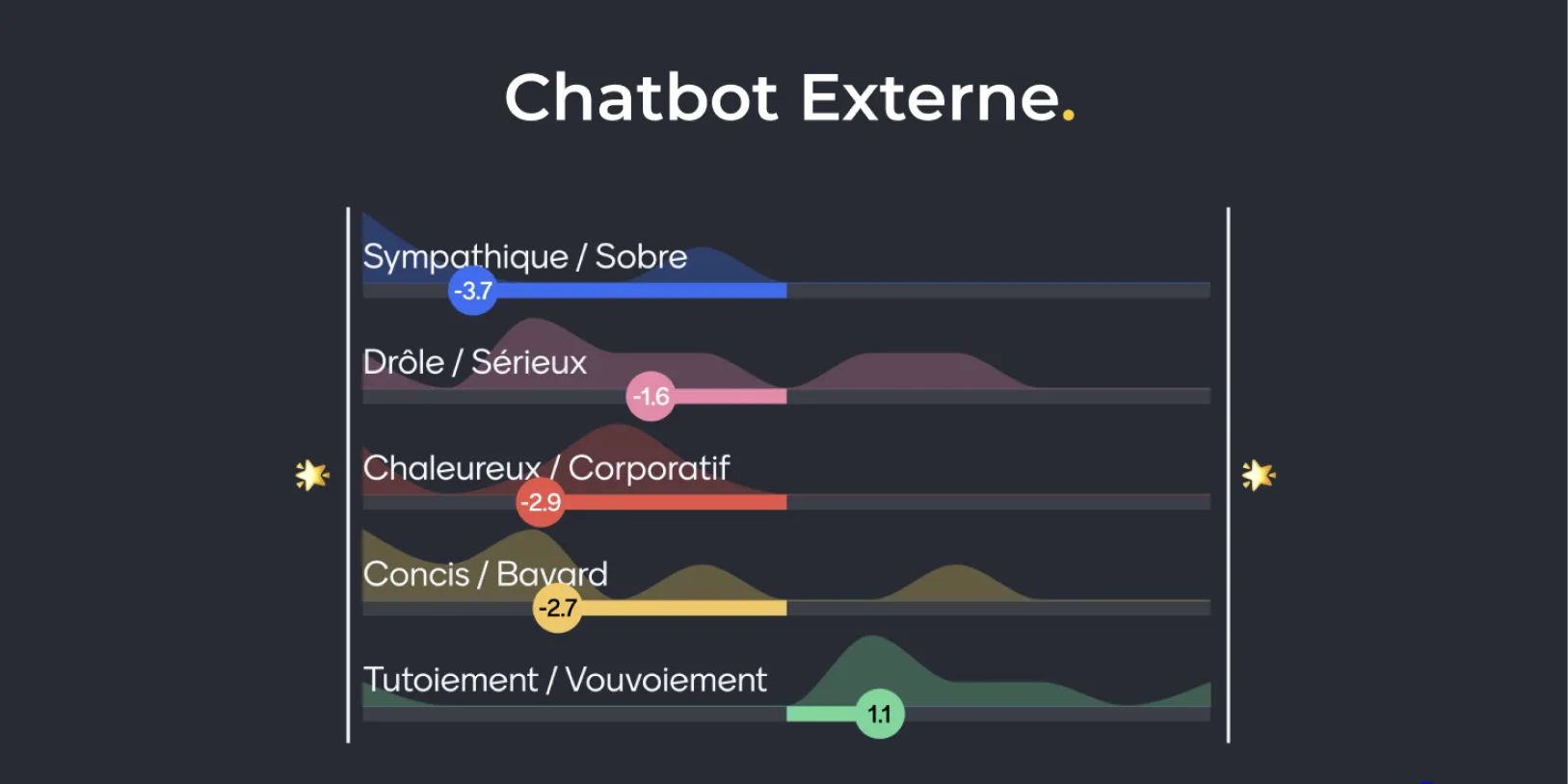
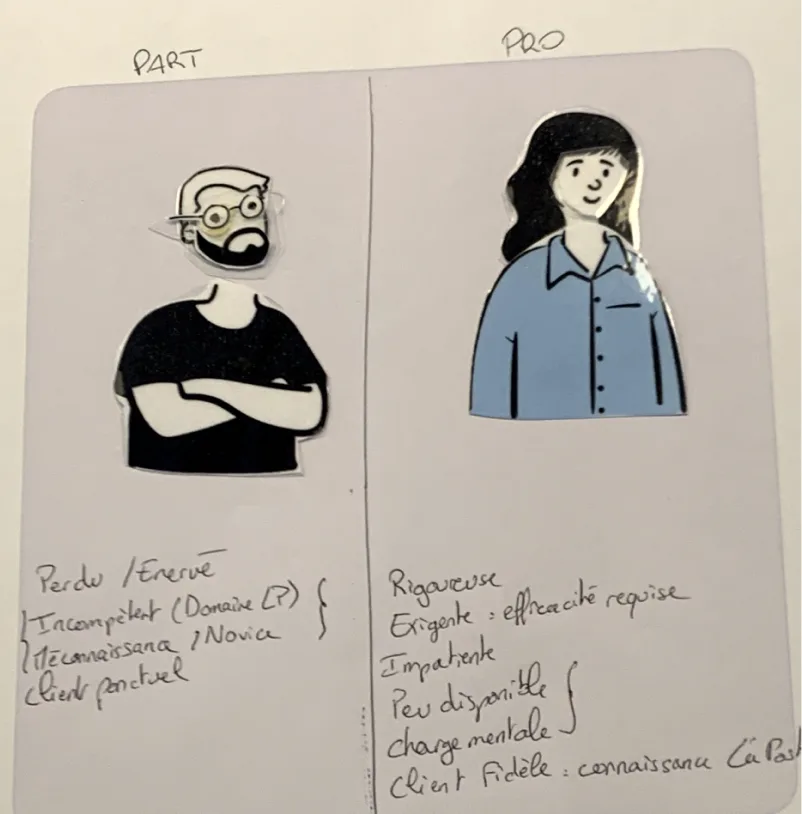
Stakeholder input, then Design synthesis
Chatbot manager’s constraints, needs and day-to-day practices.
Audit, benchmark, interviews and user tests.
Structuring, arbitration and consistency across the five products.
Formalised by the Design teams. A workshop vote was never a design decision.
04Framework
After several months, the challenge was no longer finding problems. We had plenty of them.
The real work was turning evidence from five products, users, chatbot managers, benchmark findings and workshops into a foundation teams could actually reuse.
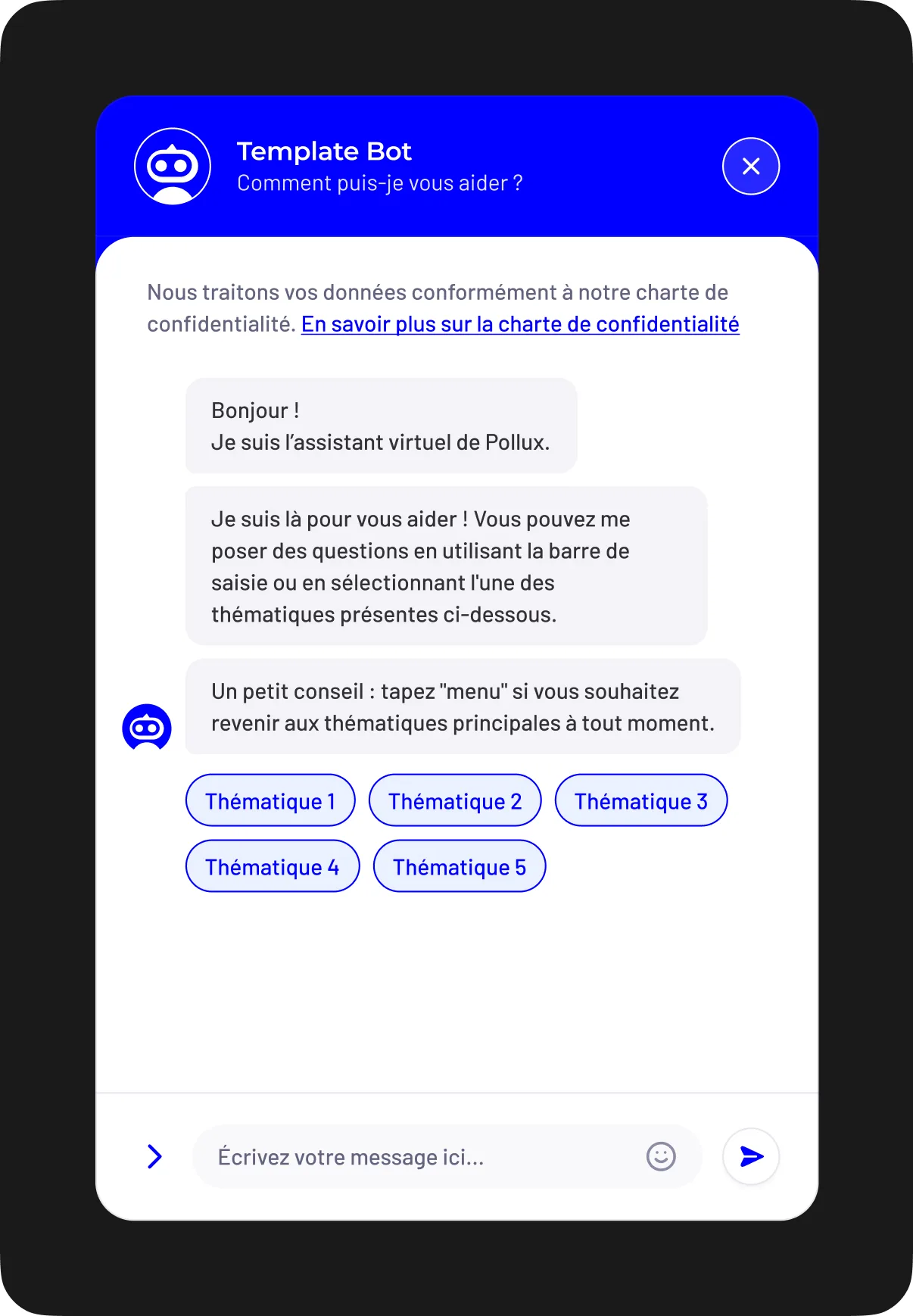
We structured shared principles around the key moments of a chatbot experience: onboarding, first actions, conversation, errors, human escalation, feedback and closing.
The goal was not to make the five products identical, but to define where consistency added value and where individual needs should remain.
01
Audit, benchmark, interviews, tests, workshop outputs.
02
Issues that appeared in more than one product.
03
UX and writing rules started once, for all bots.
04
Documents chatbot teams could apply and adapt.
05Handoff
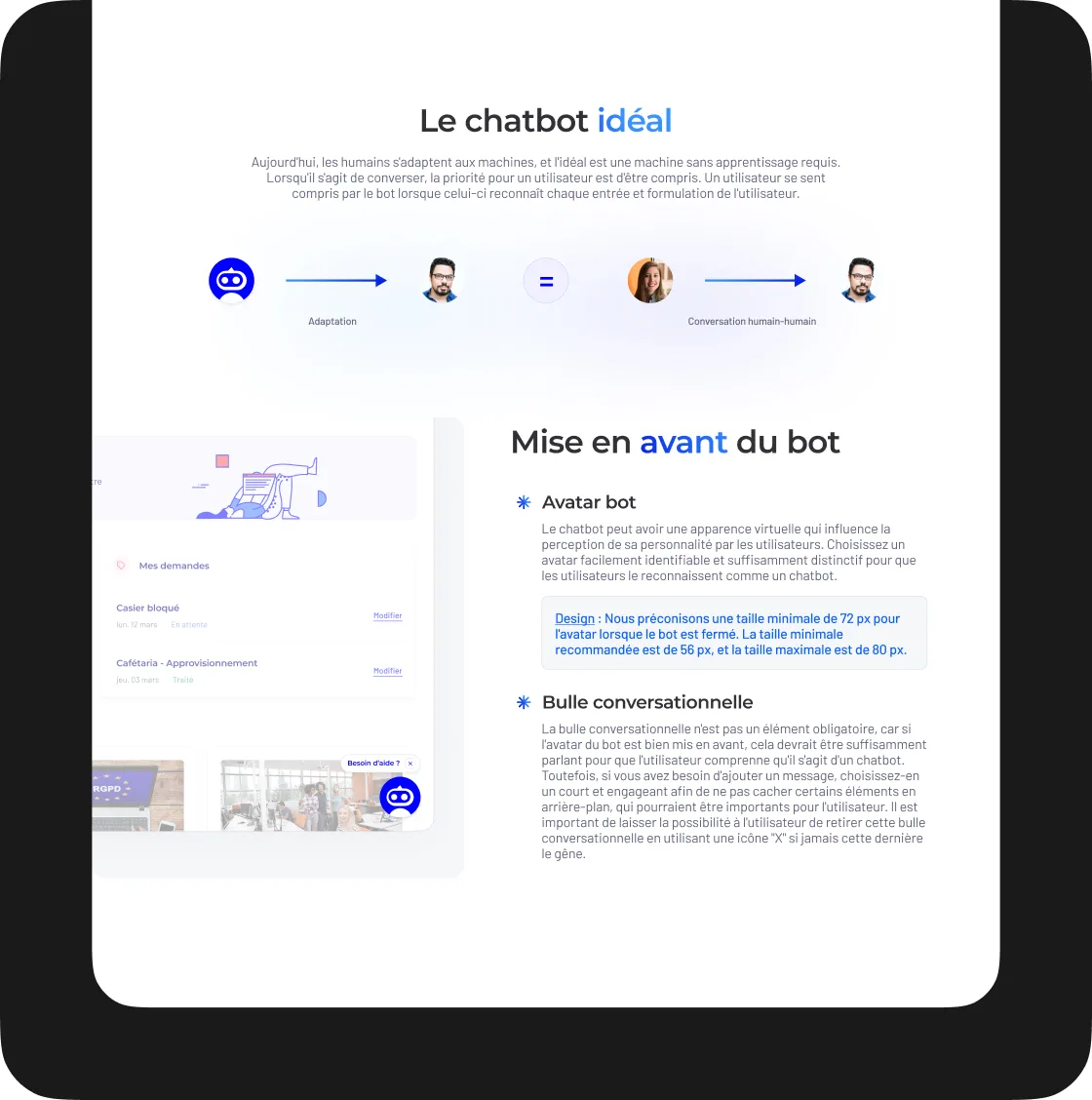
We deliberately split the framework into several focused deliverables rather than one exhaustive document, making the recommendations easier to navigate, maintain and apply across different chatbot contexts.
The work was presented and refined first with the project team, then shared with the wider Probayes team. It gave the different chatbot teams a common foundation they could reuse and adapt over time.
Final deliverables
06Reflection
The most valuable part of this project was not defining one ideal chatbot, but learning how to turn fragmented evidence from five different products into a shared framework without flattening their differences.
It changed how I think about consistency across products. Consistency does not mean making every experience identical. It means giving teams a strong enough common foundation that they can reuse patterns, make better decisions and still adapt the experience to their own users and context. The guidelines and reference template were our way of making that foundation concrete and actionable.
If I extended the mission today, I would take at least one chatbot through the next stages: testing the new experience, Design–Dev collaboration, QA, release and post-launch observation. That would close the loop between defining a reusable framework and validating how well it performs inside a real product.